
CONTENTS
🌌 Interstellar: A Temporal Collision of Sound and Emotion
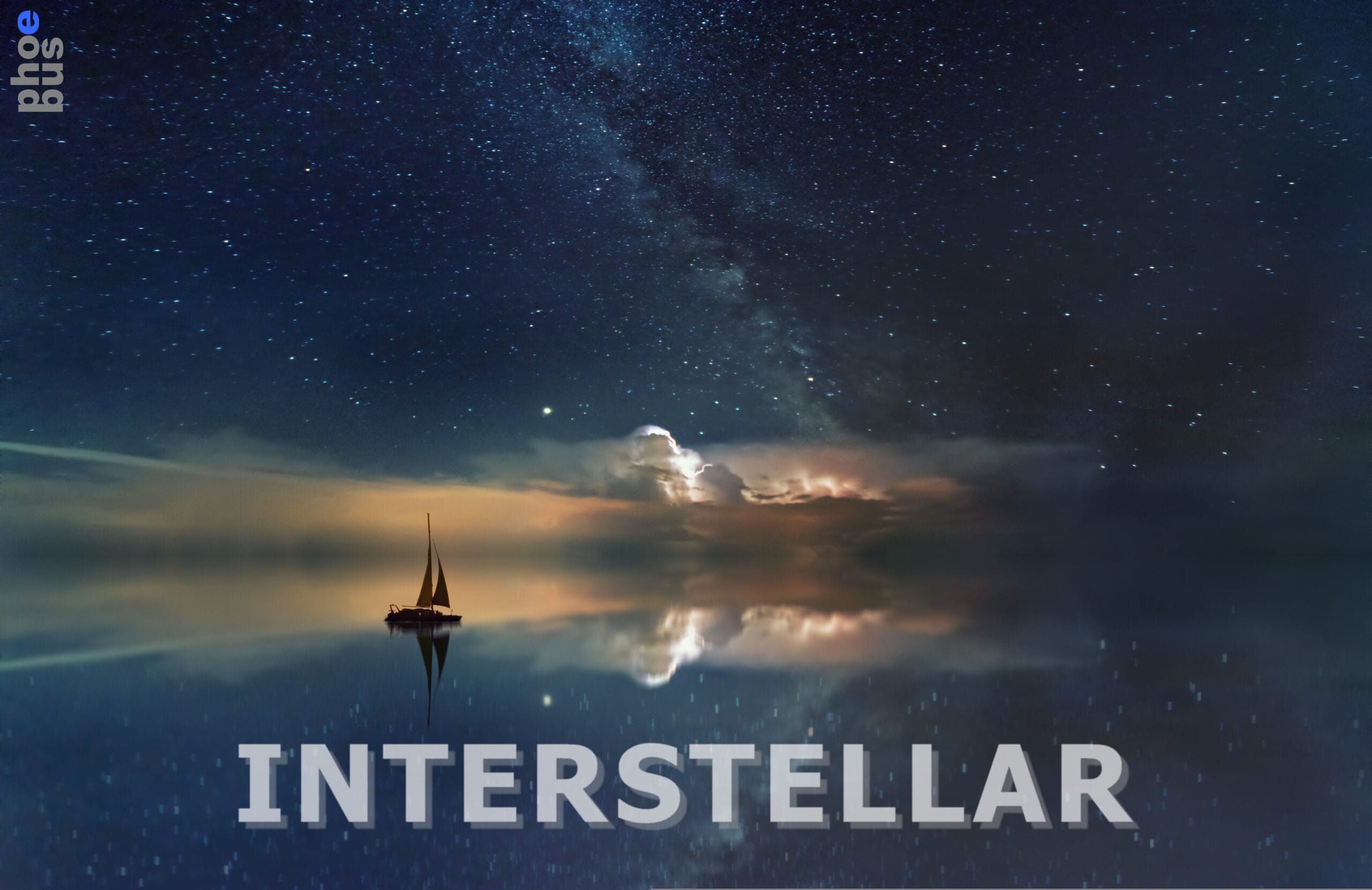
Following in the footsteps of my recent therapeutic release, Princesse Douceur, I am thrilled to present Interstellar. This album is not just a collection of music; it is an ambitious journey through, beyond, and backward against the flow of time within our Universe. It tells a story that spans decades and eons, challenging our perception of reality through the medium of sound.
In creating Interstellar, I have attempted something deeply personal and conceptually vast: I have brought about a collision between particles of sound and waves of emotion from two pivotal points in time—1983 and 2014.
The Philosophy of 31 Years vs. Eternity
At first glance, the 31-year gap between 1983 and 2014 seems like an entire lifetime. In our human experience, it represents the transition from the analog era to the digital frontier, from the birth of iconic synthesizers to the modern age of high-definition therapeutic audio. However, the core philosophy of this album asks a humbling question: What are these 31 years when compared to the 13.7 billion years of our Universe’s existence?
In the eyes of the cosmos, three decades are but a “snap of the fingers.” This realization is the heartbeat of the album. It allows us to merge the nostalgic textures of the past with the sophisticated production of the present, creating a timeless “Interstellar” bridge.
Track-by-Track: The Sonic Architecture
The album is composed of three “official” tracks, plus the inclusion of the beloved Princesse Douceur, acting as the emotional anchor for the entire experience.
1. Ritournelle Galactique (05:43)
This opening track is a “Galactic Ritornello”—a recurring theme that orbits the listener’s consciousness. Clocking in at nearly six minutes, it serves as the launchpad for our temporal journey. I used vintage-style oscillators to evoke the spirit of 1983, blending them with the crystalline spatial effects of 2014.
The track functions as a “ritournelle” because of its circular nature; it mimics the orbit of planets and the cyclical way memories return to us. It is designed to induce a state of light trance, helping the listener detach from the immediate stress of their surroundings and begin the ascent into the stars.
2. Le Mur (03:40) – The Wall
“Le Mur” (The Wall) represents the barriers we face—both physical and psychological. In the context of Interstellar, it symbolizes the sound barrier, the edge of the observable universe, and the walls of time itself.
Musically, this track is more dense and textured. It features layered synthesizers that build a sense of immense scale. The objective here is to allow the listener to “lean” against the sound, using the pressure of the frequencies to release internal tensions. It is a moment of confrontation with the vastness of space, ultimately leading to a breakthrough into a state of profound silence.
3. Furyo (03:25)
Named with a nod to the cinematic and cultural influences of the early 80s, Furyo is a masterpiece of restraint and atmosphere. It captures a specific “East-meets-West” aesthetic that was revolutionary in 1983.
I wanted this track to feel like a memory of a film you’ve never seen. It uses delicate, percussive melodies that float above a deep, resonant bass floor. At just under three and a half minutes, it is a concentrated dose of nostalgia and peace, providing a bridge between the human heart and the cold beauty of the interstellar void.
The Legacy of “Princesse Douceur”
No journey through this album would be complete without the presence of Princesse Douceur. As the spiritual predecessor to Interstellar, it provides the “human” element—the sweetness and the grace—that makes the coldness of space feel welcoming. By including it here, we complete the circle, ensuring that the listener feels protected and nurtured even as they travel billions of light-years away from home.
The Therapeutic Application of Interstellar
This album was specifically mastered to maximize its therapeutic potential. The juxtaposition of 1983 and 2014 sounds is not merely an artistic choice; it is a tool for neuro-acoustic stimulation.
For Sleep and Insomnia: The slow-tempo arrangements in Furyo and Princesse Douceur help the brain transition into Delta wave states. The cosmic “hiss” and deep pads act as a high-fidelity white noise, perfect for quieting a racing mind.
For Stress Management: Listening to Le Mur allows for a controlled emotional release. By focusing on the “density” of the sound, listeners can practice mindful breathing, timing their inhalations to the expansion of the synthesizers.
For Creative Inspiration: The expansive nature of Ritournelle Galactique is ideal for writers, artists, and thinkers. It opens the “spatial” part of the brain, allowing for lateral thinking and the birth of new ideas in the silence between the notes.
Technical Recommendation
To experience the “collision of particles” between 1983 and 2014, I recommend listening to Interstellar in a dark room with noise-canceling headphones. The spatial mixing was designed to create a 360-degree field of sound, ensuring that you don’t just hear the music—you inhabit it.
Step into the void. Cross the bridge of 31 years. Discover that in the heart of the Universe, everything is happening all at once, and everything is at peace.
1 thought on “Interstellar: Sound and Emotion”