

CONTENTS
- 🧘 H2 Zen: The Active Meditation Guide (20+ Minutes)
- I. The Unique Structure for Conscious Immersion
- II. When and How to Listen to H2 Zen
- III. The Guided Return to Awareness
- 1. Focused Attention Meditation (Samatha) 🎯
- 2. Counting Meditation (with External Cues) 🔢
- 3. Body Scan and Rhythmic Release 🌬️
- 4. Open Awareness (Non-Directive) with Background Anchor 🌌
🧘 H2 Zen: The Active Meditation Guide (20+ Minutes)
Immerse yourself in over 20 minutes of carefully crafted sonic serenity with H2 Zen by Phoebus for forcemajeure.com. This track is not merely background sound; it is a specialized tool designed to facilitate deep relaxation while maintaining full, conscious awareness, making it an essential companion for disciplined mindfulness and meditative practice.
I. The Unique Structure for Conscious Immersion
H2 Zen is built upon a delicate balance: it must be soothing enough to quell the agitated mind, yet engaging enough to prevent mental drift.
Subtle Sounds for Deep Relaxation
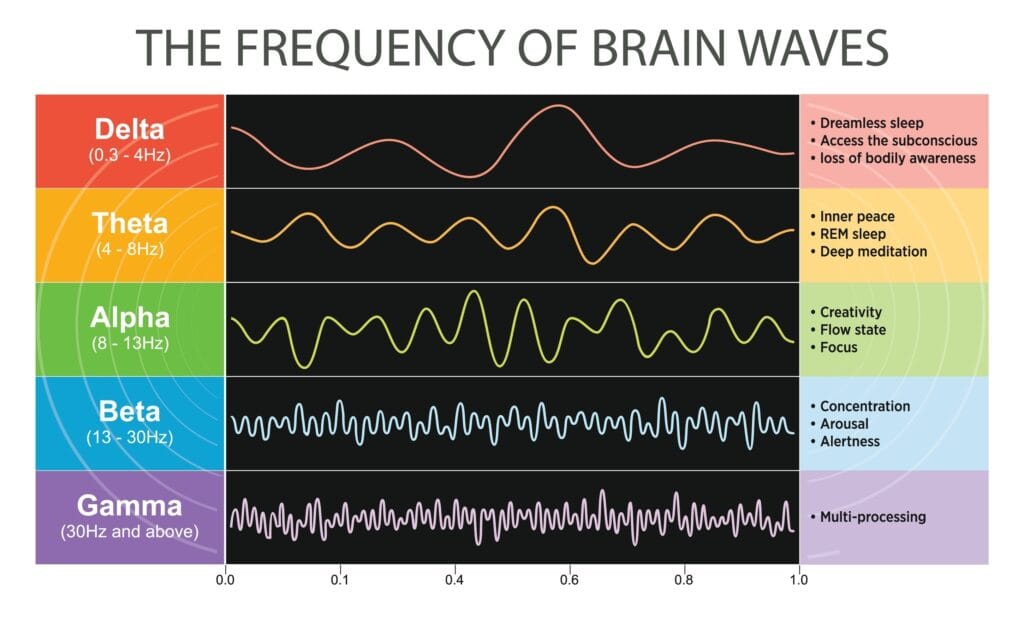
The core of the music provides a perfect relaxing atmosphere. It utilizes gentle harmonic textures and ambient washes, creating a feeling of spaciousness and tranquility. The primary aim is to subtly lower the listener’s brainwave frequency, moving from the alert Beta state down towards the relaxed Alpha state (8–13 Hz). This is the subtle foundation required to induce deep physical and mental relaxation.
The Anti-Sleep Mechanism: The Wooden Sticks
The defining feature of this track lies in its ingenious use of rhythm to keep the listener present. The music is subtle enough to induce deep relaxation while keeping you fully awake. This is achieved through the inclusion of the sounds of regularly tapped wooden sticks.
This constant, yet soft, percussive element serves a critical, specialized function: it prevents you from falling into a deep sleep (and therefore, from falling asleep :-)). In deep meditation, particularly for beginners or during long sessions, the relaxation can become so profound that the mind slips into the Delta state, leading to actual sleep. The wooden sticks act as a gentle, non-intrusive auditory anchor. Their repetitive, predictable rhythm engages just enough of the auditory cortex to maintain a functional level of wakefulness, ensuring the listener remains in the state of conscious observation crucial for meditation and mindfulness practice.
II. When and How to Listen to H2 Zen
This track is specifically designed for intentional practice, moving beyond passive listening:
Accompanying Daily Meditations: This music is perfect for accompanying your daily meditations. Whether practicing mindfulness, concentration (samatha), or open awareness, the stable sonic environment supports sustained focus without becoming a distraction. The consistent rhythmic anchor is particularly helpful when working to quiet internal mental chatter.
Focus and Study: Because the music encourages a state of relaxed focus (Alpha state), H2 Zen is also highly effective as background sound for deep work, study, or any creative endeavor requiring sustained, calm concentration.
Not for Sleep: Crucially, the track’s design deliberately counteracts sleep, making it unsuitable for those seeking a sleep aid (unlike many other relaxation tracks). Its purpose is heightened, relaxed awareness.
III. The Guided Return to Awareness
The track’s structure includes a sophisticated mechanism for gently concluding the session and ensuring a smooth transition back to the active Beta state:
The Soft Landing: The last 5 minutes of this relaxing music become increasingly quiet. This intentional reduction in sonic intensity, often involving the fading of the rhythmic sticks and the gradual lowering of ambient volume, serves as a soft landing.
Guiding Back to a Higher Level of Awareness: This slow fade-out allows the listener to gently disengage from the meditative state without shock or abruptness. It brings the practitioner back to a “higher level of awareness,” meaning a transition back to the fully cognitive, externally focused state required for daily life, but retaining the calm and clarity achieved during the deeper part of the session.
H2 Zen is thus a meticulously engineered tool for the dedicated practitioner, offering more than 20 minutes of guided focus, powered by a rhythmic anchor to ensure alert, profound meditation.
Listen to full track:
Going further, here are four meditation techniques that pair exceptionally well with H2 Zen:
1. Focused Attention Meditation (Samatha) 🎯
This is the most straightforward technique to use with H2 Zen as the music provides a ready-made external object of focus.
Technique: Instead of focusing on the breath alone, you intentionally shift your primary anchor to the sound of the wooden sticks.
How to Apply: Focus intently on the sound of the stick tap. When your mind wanders (and it will), gently acknowledge the distraction, and bring your attention back to the precise moment the wooden stick hits. You can use the subtle ambient music (the ‘H2’ element) as a secondary, soft anchor, but the sharp, regular rhythm is the main point of return.
Benefit: This uses the music exactly as intended: the rhythm prevents the mind from relaxing so deeply that you lose consciousness, ensuring the retention of wakeful awareness (lucid focus).
2. Counting Meditation (with External Cues) 🔢
This technique uses the rhythm to create a structured count, which is more engaging than relying solely on an internal count.
Technique: Assign a number to each distinct sound or group of sounds within the rhythmic structure.
How to Apply: Listen to the pattern of the sticks. If the pattern repeats every four taps, you would count: “One” (on the first tap), “Two” (on the second), “Three” (on the third), “Four” (on the fourth), and then start over at “One.” The steady tempo of the stick helps regulate the count, adding a layer of structure that is easy to follow.
Benefit: Counting is excellent for concentration and for beginners, as it gives the prefrontal cortex a simple task to occupy it, making it less likely to generate distracting thoughts.
3. Body Scan and Rhythmic Release 🌬️
This technique integrates physical awareness with the external rhythm to deepen relaxation.
Technique: Scan your body mentally, focusing on relaxing muscle groups, and use the music to time the release of tension.
How to Apply: Start the session with your feet. On one stick tap, become aware of the tension. On the next tap, visualize that tension dissolving as you slightly exhale. Move systematically through your body—ankles, calves, knees, etc.—using each rhythmic cue to confirm the relaxation of the previous area before moving your attention to the next.
Benefit: It connects the mind, body, and external environment. The rhythm provides the structure needed to keep the scan active and thorough for the entire 20+ minutes, preventing the mind from lingering too long on painful or distracting areas.
4. Open Awareness (Non-Directive) with Background Anchor 🌌
Once you achieve a deeper state of relaxation, you can use the rhythm as a passive reference point.
Technique: Practice being aware of everything that enters your field of consciousness—thoughts, sounds, sensations—without attaching to or judging any of it.
How to Apply: Allow thoughts and sounds to come and go like clouds. The rhythmic tap of the stick remains in the background, serving as a subtle, objective confirmation that you are still present. It’s not the focus, but a constant reminder of the present moment. If you suddenly realize you’ve been lost in a daydream for five minutes, the moment you notice the rhythmic tap again is the instant you gently return to open awareness.
Benefit: This is a more advanced technique where the stick prevents total mental drift, acting as a gentle “reset button” that is always available without being demanding.